
Hotel Owner Conference 2026 series
Pricing for 2027: why a flat year isn’t fine
Demand is holding up. Costs are not. Why holding 2026 room rates into 2027 cuts profit by around 12% — and what an independent hotel should do about it now.
Where part one left off
In part one of the Lloyds session, the bank set out why 2027 looks the way it does: demand holding up, costs rising faster, and rates staying higher for longer. This part asks the practical question that follows: what should an independent hotel charge next year?
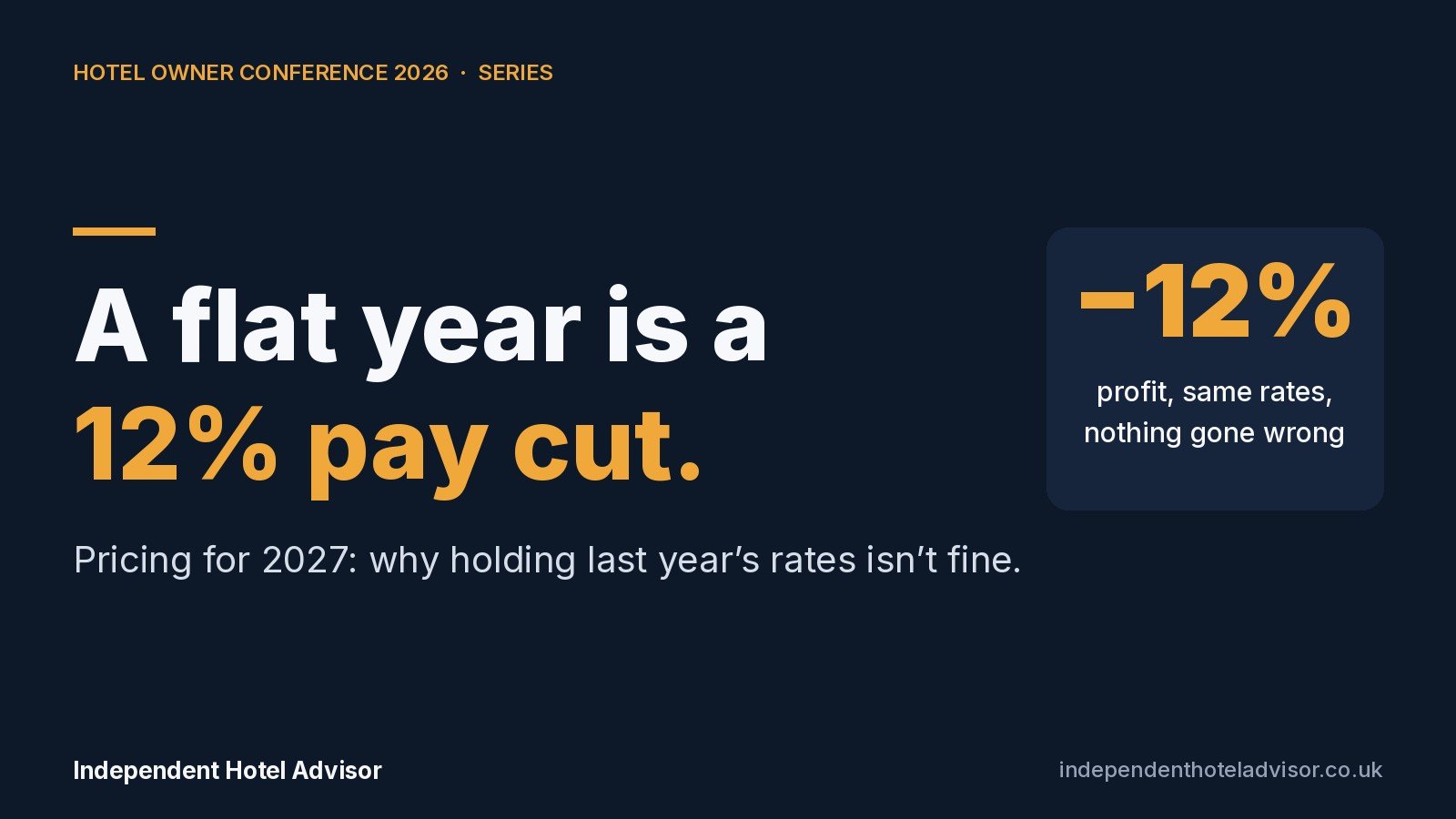
A flat year is a falling year
Same revenue, same occupancy, nothing going wrong — and profit falls by around 12%.
Most owners judge the year against last year. If revenue matched 2026, it feels like an acceptable result. In 2027 it won’t be.
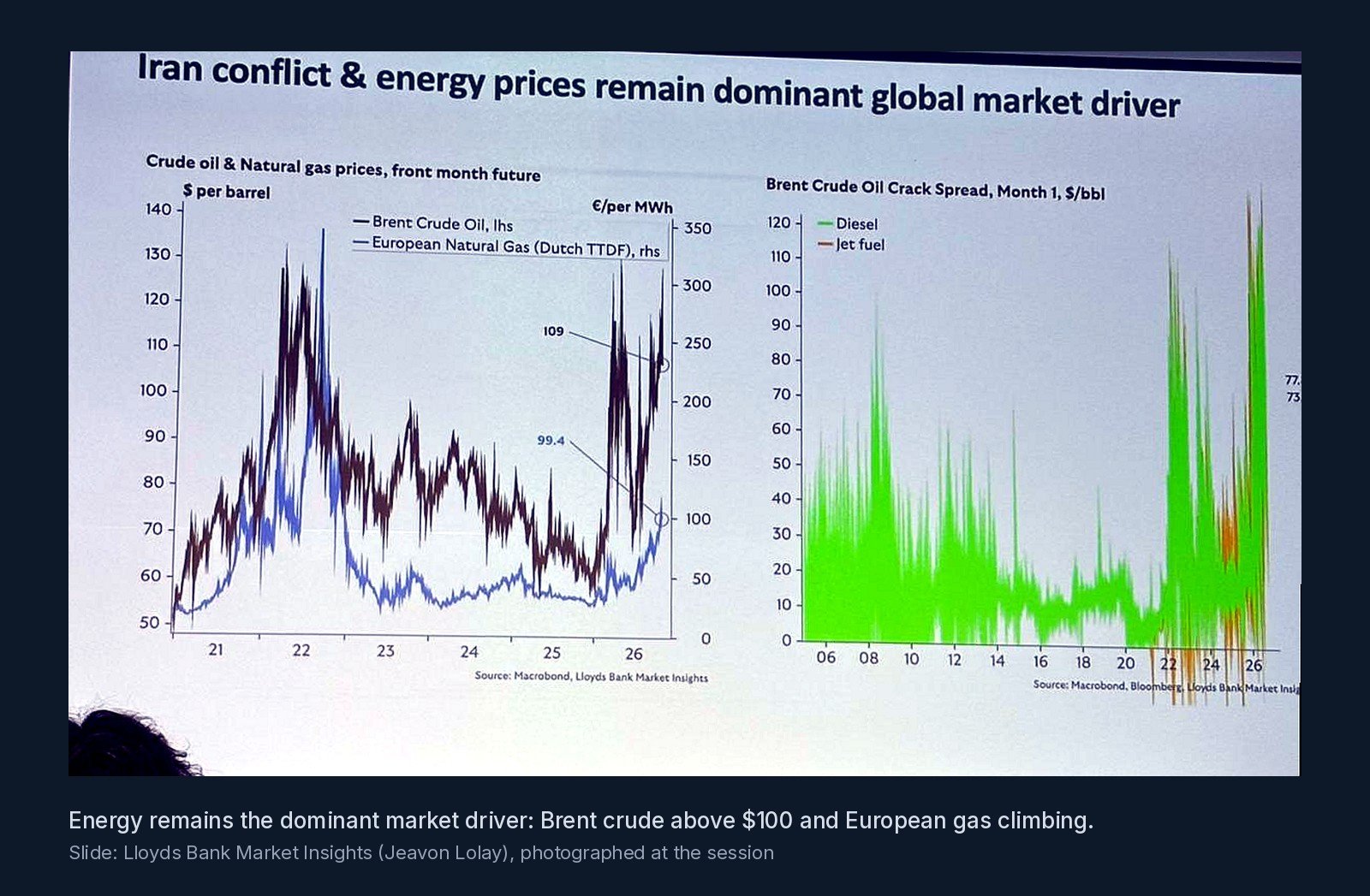
The National Living Wage rises 3.9% to £13.21 from April 2027, and the hotels that pay above it will have to move their other rates to keep the differentials. Energy remains the biggest risk in the economic outlook, and inflation is expected to stay above target into next year.
Take an example independent hotel turning over £1m, and hold its 2026 room rates into 2027:
| 2026 | 2027, rates held flat | |
|---|---|---|
| Payroll (+5%) | £330,000 | £346,500 |
| Utilities (+10%) | £60,000 | £66,000 |
| Other costs (+4%) | £250,000 | £260,000 |
| Commission | £80,000 | £80,000 |
| Profit | £280,000 | £247,500 |
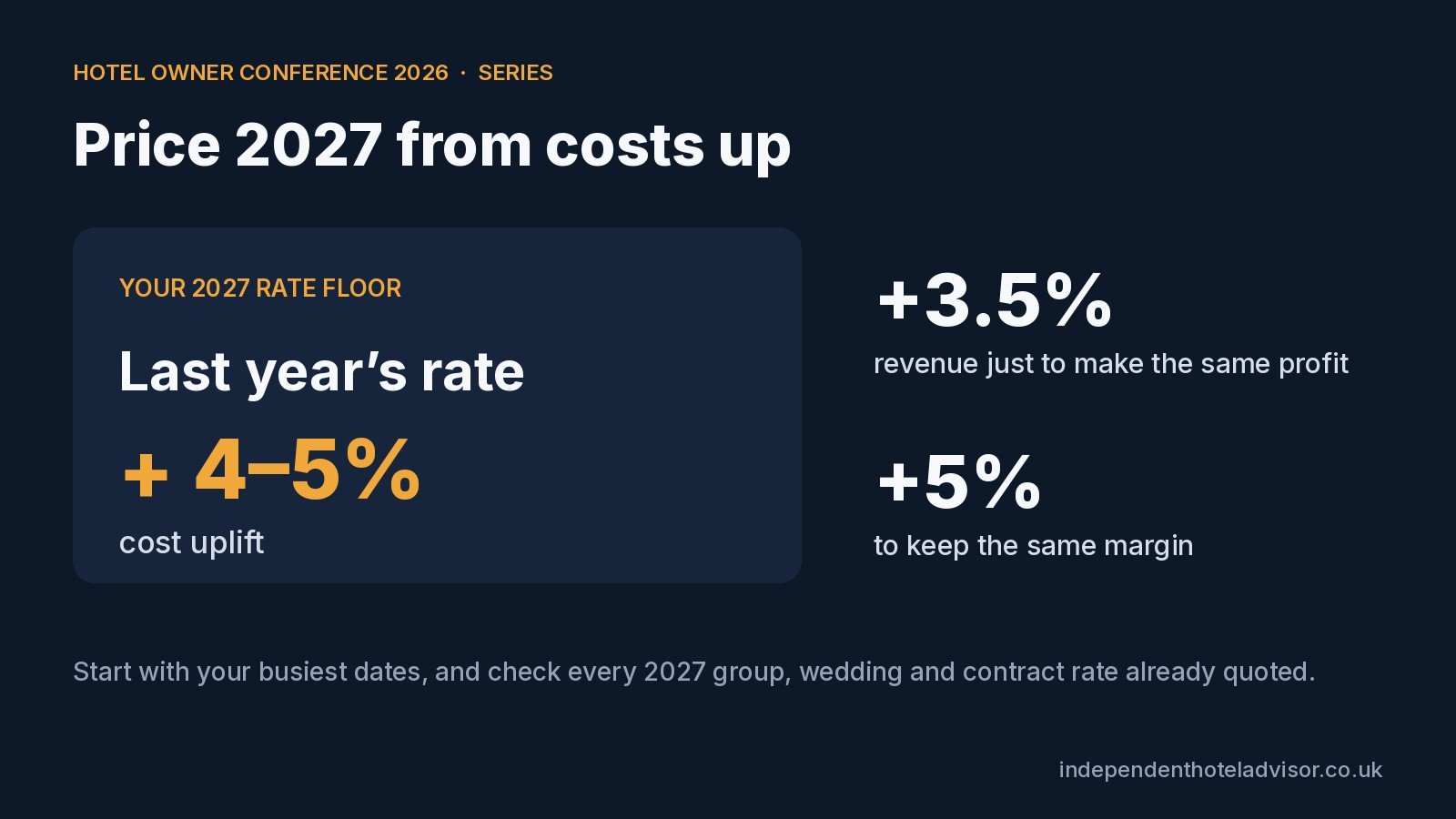
Same revenue, same occupancy, nothing going wrong, and profit falls by around 12%. To make the same money the hotel needs about 3.5% more revenue. To keep the same margin it needs about 5%.
The figures will be different for every hotel. The direction won’t be.
1. Know your cost per occupied room
Most independents know their occupancy and average rate. Far fewer know what it costs them to sell a room: the payroll hours, laundry, utilities and commission behind every night. Without that number, pricing is guesswork.
Work it out monthly at the very least, and weekly if you can. It is the single most useful number for the decisions below.
2. Price 2027 from costs up, and do it now
A good rule for pricing is never to sell below what you achieved on the same date last year. For 2027 that rule needs an update: the floor becomes last year’s rate plus your cost uplift, typically 4–5%.
Start with your highest-demand dates, where the increase is easiest to hold. Then check everything you have already quoted for 2027. Group, wedding and contract rates agreed at 2026 prices lock in a loss for the whole of next year, and many of them are being signed now. If you want help with this, see hotel revenue management.
3. Schedule staff to arrivals, not habit
On the margins panel, one point stood out: productivity isn’t about making people work harder, because most teams are already at capacity. It is about matching labour to the arrival pattern.
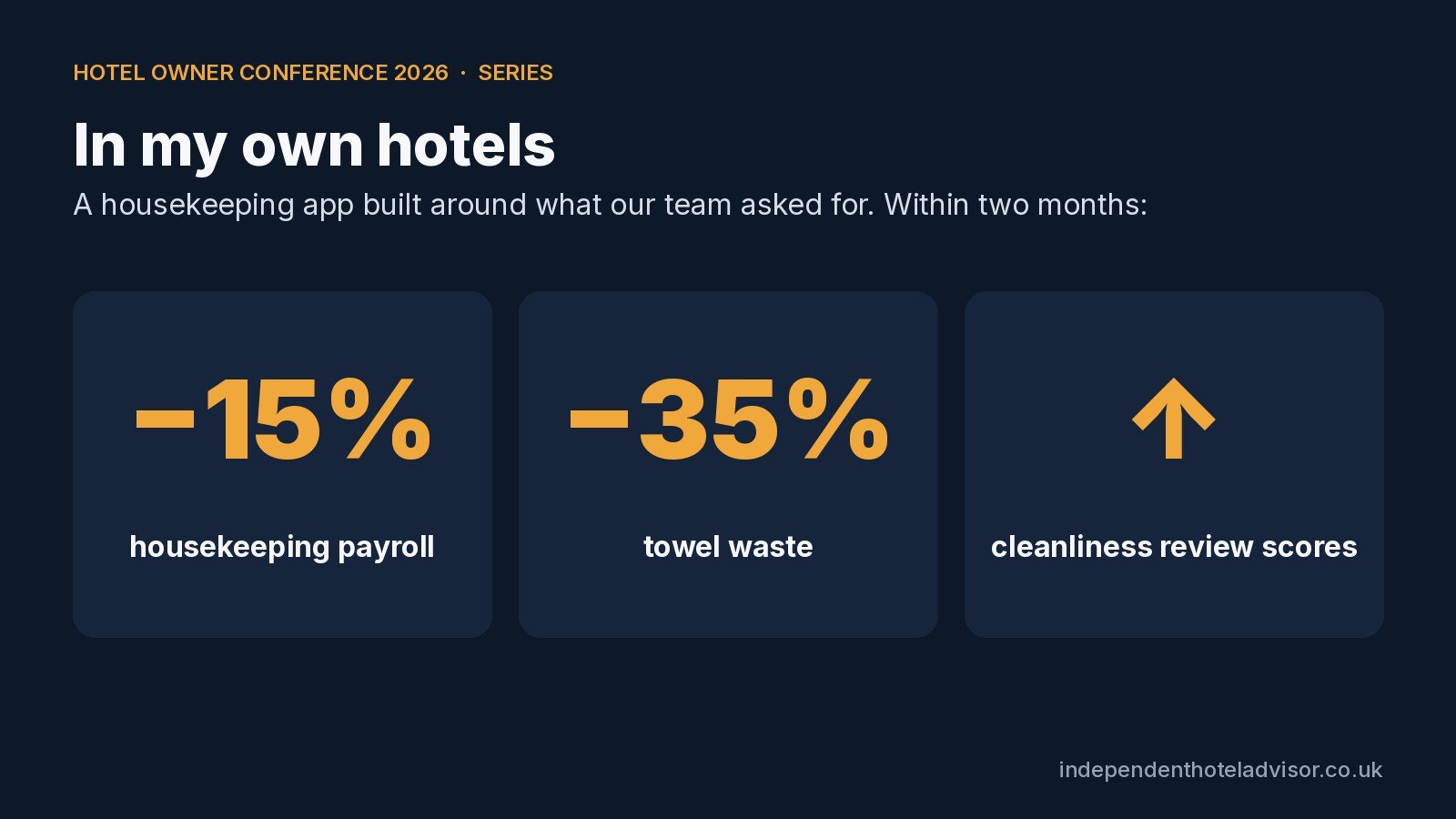
Rota housekeeping to forecast check-outs and reception to forecast arrivals, rather than a fixed weekly pattern. In my own hotels, a housekeeping app built around what our team asked for cut housekeeping payroll by 15% and towel waste by 35% within two months, while cleanliness review scores went up.
4. Energy: contract first, then smart controls
Know when your energy contract ends and what you will be moving onto. Larger groups hedge most of their energy in advance; an independent can at least avoid being caught on a variable rate at the wrong moment.
Then look at heating that follows occupancy: unsold rooms set back automatically and warmed before a guest arrives, ideally triggered by your booking system. Measure energy per occupied room before and after, so you know what it is actually saving.
5. Use AI where it pays, and measure it
AI has a place, but not as a shopping list. Pick one area — demand forecasting for pricing, staff scheduling or guest messages — run a pilot, and judge it on one number. If it works, extend it. If it doesn’t, stop.
The point
Demand is holding up. The hotels that come through 2027 well will be the ones that price for their real costs and run their teams and buildings to match, not the ones waiting to see what next year brings.
If you want a second pair of eyes on your 2027 pricing, costs or rota, a hotel review takes about a week end to end, with one or two days on site. I take no commission on anything I recommend. Talk to me about your hotel.
Hotel Owner Conference 2027
Thinking about Hotel Owner Conference 2027?
Early tickets are open at this year’s price until 2 December, with the code REBOOK27.
Get a Free Consultation
Let’s talk about your hotel’s performance
Book a consultation with Andreas – Supporting independent hotels, guesthouses and boutique properties across the UK & Ireland